
Heating your home is one of the biggest drivers of both your energy bills and your carbon footprint, as most homes in the UK still rely on gas or oil boilers. But that’s starting to change.
Heat pumps are a low-carbon alternative that are becoming more common across the UK. They’re highly efficient and could help reduce both your emissions and your energy use.
Switching to a heat pump is a big decision, and it won’t be right for every home. We explain what heat pumps are, the benefits of installing a heat pump, and help you understand whether or not a heat pump is right for your home.
What is a heat pump?
A heat pump is a piece of technology that helps heat your home and your water.
Even in cold weather, there is still heat in the air or ground. A heat pump captures this heat and brings it indoors. It then uses electricity to make that heat warm enough to heat your home. The heat is sent through your radiators, underfloor heating, or hot water system.
Instead of creating heat by burning fuel, a heat pump moves heat from one place to another. This is why it can use less energy than a traditional boiler.
There are two main types of heat pumps:
- air source heat pumps, which take heat from the air
- ground source heat pumps, which take heat from the ground.
Air source heat pumps are the most common choice for homes in the UK.
What are the benefits of air source heat pumps?
Installing a heat pump has several benefits, especially if you’re looking to reduce your energy use and future energy costs:
Heat pumps use less energy to heat your home
Heat pumps are very efficient because they move heat rather than create it. This means they can use less energy than a traditional gas or oil boiler to keep your home warm.
Installing a heat pump can help lower your energy bills over time
Depending on your home, how well it’s insulated, and the system you replace, a heat pump can help reduce running costs — especially as energy prices and tariffs change.
A heat pump can lower your carbon emissions
Because heat pumps don’t burn fossil fuels, they can significantly reduce your home’s carbon footprint. This also means you’re less reliant on gas.
Heat pumps are a more future-proofed heating system
As the UK moves away from fossil fuel heating, heat pumps are expected to become more common. Installing one now can help prepare your home for future changes.
Is a heat pump right for your home?
Heat pumps can work well in many homes, but they perform best in the right conditions.
You may need to consider:
- Insulation: A well-insulated home keeps heat in, helping a heat pump work effectively.
- Space: You’ll need room outside for the unit, and space inside for a hot water cylinder.
- Heating system changes: Some homes may need larger radiators or small changes to how heating is used.
- Upfront cost: Installation costs are usually higher than a gas boiler, although funding may be available.
Looking at your whole home, not just your heating system, is key to understanding if a heat pump will work well for you.
How can I find out if heat pumps are suitable for my home?
Every home is different. The best way to understand if a heat pump is right for you is to get a personalised plan.
Our free tool Homewise can help you:
- see if a heat pump could work in your home
- understand what improvements you might need first, like insulation
- get an idea of costs and potential savings.
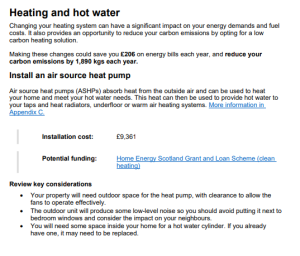
Here is an example of the kind of information shared in a Homewise improvement plan.
How much does a heat pump cost?
The cost of installing a heat pump depends on your home and the work needed. While the upfront cost is usually higher than replacing a boiler, grants and financial support may be available to help reduce this.
Running costs will vary depending on your home, how well it’s insulated, and how you use your heating. In some homes, heat pumps can reduce energy use over time.
Can I speak to someone about heat pumps?
Our friendly, expert advisors are here to answer your questions and share helpful, impartial information for your home.
Call us free on 0808 1968268, or fill out our contact form and we’ll get back to you with the information you need to take the next step.